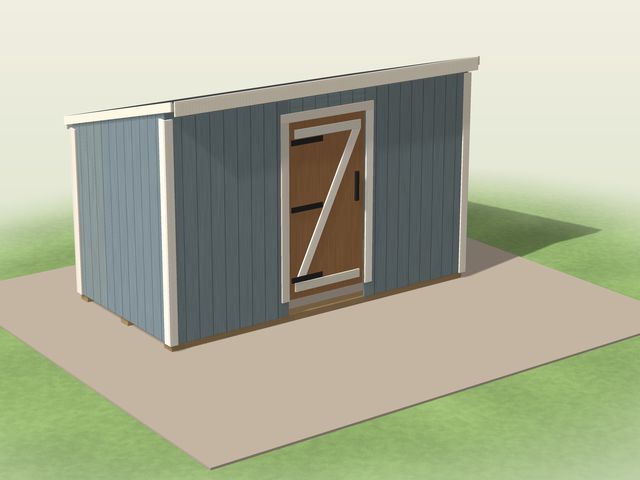
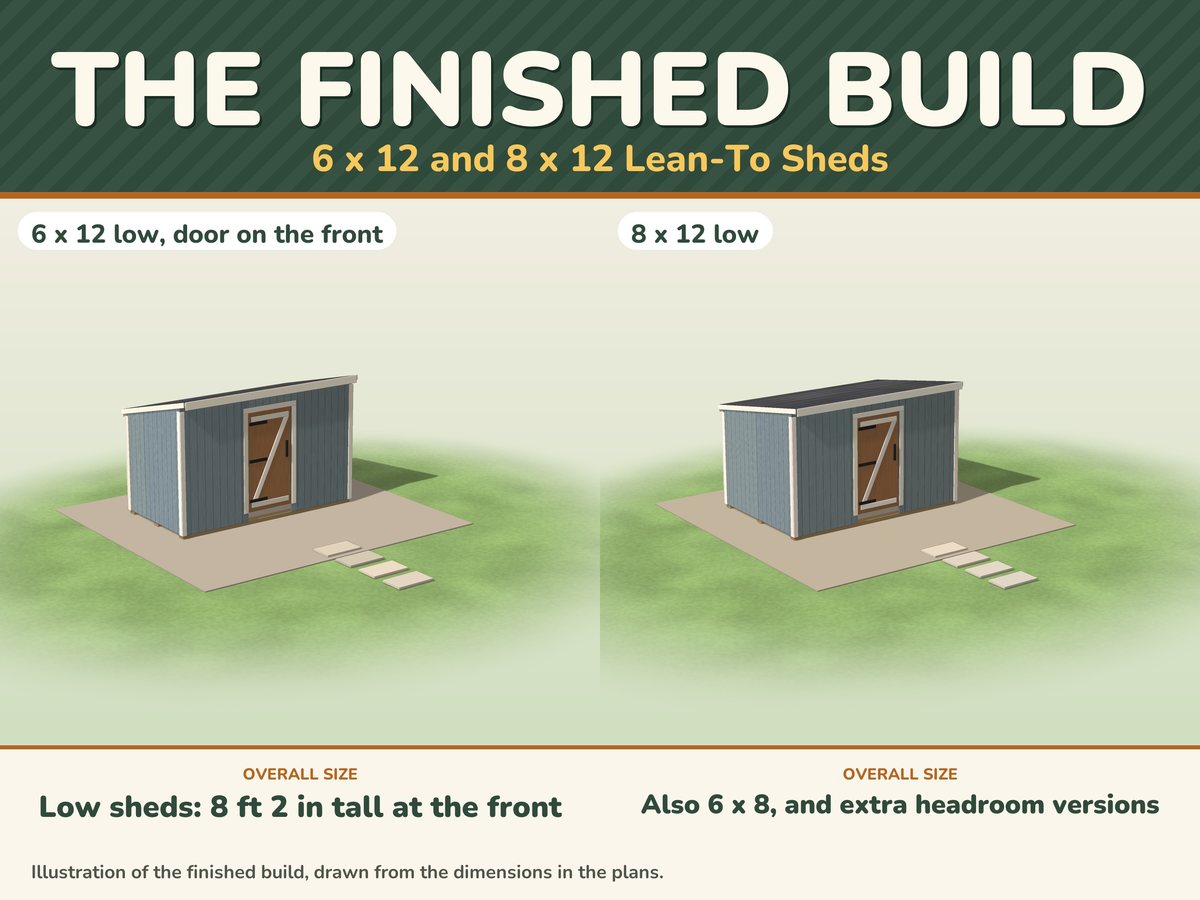
An 8x12 is 96 sq ft. These plans build it as a lean-to, with lettered parts, a numbered step and drawing for each stage, a cut list and a shopping list.
Dimensioned drawings, lettered parts and one drawing per numbered step
Cut list and shopping list with sheet counts for each size
Cost spreadsheet and CAD files, plus a permit drawing set for your building department to review
Add up the parked footprint of everything going in, multiply by 1.5 so you can reach the back, then round up to the next standard size. A push mower, two bikes, a wheelbarrow and one shelving unit park in about 49 sq ft; with aisles that becomes about 74 sq ft, an 8x10, or an 8x12 once you allow 20 percent for new gear. A lawn tractor alone needs about 40 sq ft of floor and a door at least 5 ft wide, so double doors matter more than footprint.
By Glen · Last updated 2026-09-26 · Researched from manufacturer specifications, published code summaries and verified owner reviews · How we pick
Enter what you plan to store and this calculator adds up the parked footprint, adds room to reach the back and returns the standard shed size that covers it. It also flags when door width, not floor area, is the limit.
Prices change often; the button shows today's price on Amazon.
How does the shed size calculator work?
It adds the parked footprint of every item you enter, using typical dimensions for each class (a 42 in lawn tractor parks at about 4.5 x 6 ft, a push mower with its handle folded at 2 x 3.5 ft, an adult bike at 2 x 6 ft). It then multiplies by 1.5. That factor is the space you need to walk in, turn around and reach the back without unloading the front. Finally it adds your growth allowance and picks the smallest standard shed size whose floor area covers the total and whose long wall is at least 1 ft longer than your longest item.
The door result is separate, and it is the one people miss. A lawn tractor needs about 5 ft of clear opening, a zero-turn about 5.5 ft. Many 8x10 kits have a single 3 ft door, which fits a push mower and nothing wider.
Why multiply by 1.5 instead of just adding footprints?
Because a shed packed wall to wall is a shed you cannot use. Owners who size by footprint alone end up unloading three things to reach the fourth. The 1.5 factor leaves roughly a 3 ft aisle down the middle of a typical 8 ft wide shed. If you hang bikes and tools on the walls, the floor numbers drop and you can size down one step; the shed organizing guide shows how.
Gift guide: shopping for a shed owner or DIYer? See the Shed Holiday Gift Guide 2026 for picks by budget, from the big gift to stocking stuffers.
Sources
Manufacturer footprint and door-width specifications for mowers, snow blowers and shed kits
IRC R105.2: storage sheds up to 200 sq ft are permit-exempt in the model code; many towns amend to 120 or 100 sq ft
Standard kit sizes from the resin, metal and wood shed catalogs on this site
Frequently asked questions
What size shed do I need for a riding mower?
A 42 in lawn tractor parks in about 27 sq ft, and with room to walk around it the calculator asks for roughly 40 sq ft of floor. In practice the door decides: you need at least 5 ft of clear opening, which most kits only offer as double doors on an 8x10 or larger. If the mower shares the shed with other gear, 10x12 is the comfortable size.
Is an 8x10 shed big enough?
For a push mower, two bikes, a wheelbarrow and hand tools, yes, with wall hooks doing some of the work. It becomes tight once a lawn tractor goes in, because the tractor takes the middle aisle and leaves narrow strips on each side. If you are unsure, the usual regret is buying too small, so size up one step when the price gap is modest.
Should I allow room to grow?
Yes, 20 percent is a sensible default. Sheds attract new gear: a snow blower, a second bike, a pressure washer. The calculator applies the allowance before rounding up to a standard size, so it often lands on the same kit anyway, and when it does not, the next size up usually costs less per square foot.
Does the calculator account for shelving and wall storage?
Shelving units are entered as floor items because they occupy floor. Items hung on walls do not need to be entered at all. If you plan to hang bikes, leave them out of the bike count and the recommendation will shrink accordingly.
This page is researched guidance, not professional engineering, legal or building-code advice. Sizes, loads and permit rules vary by product and by town: check your local code and the kit manufacturer's instructions before you build.