
Best picks · three tiers
Best large sheds
The Arrow Shed Elite 10x14 Tall Steel Shed at $1,664.70 is the best large shed for most buyers: a high-gable roofline for real standing headroom across 140 square feet, built on Arrow's reinforced Elite frame.
Picks by budget: beginner, intermediate and expert
Polar Aurora 10X12 FT Metal Outdoor Storage Shed

$369.99 · 10 x 12 ft
Who it is for: A homeowner who wants to cross into true large-shed territory (10x12 and up) without spending near $1000.
The Polar Aurora 10x12 at $369.99 is the least expensive shed in this catalog that clears the 10x12 large-shed threshold, with a window included.
Skip it if: Anyone who wants a high-gable roofline or the reinforced frame Arrow's Elite line uses at this size.
Check price on AmazonArrow Classic Metal Shed

$1,119.99 · 12 x 12 ft
Who it is for: Buyers who want a full 12x12 footprint from a known steel brand before stepping up to the Elite line.
The Arrow Classic 12x12 at $1,119.99 gives you 144 square feet on Arrow's proven Classic platform, priced well below the Elite series at a comparable footprint. That extra floor space over a 10x12 footprint is enough to fit a full workbench along one wall in addition to a riding mower, without the Elite line's added cost for headroom you may not need.
Skip it if: Anyone who wants the tallest possible walls; the Classic line uses a standard gable, not Arrow's high-gable Elite design.
Check price on AmazonLittle Cottage Co. 10x12 Value Workshop Shed

$2,559 · 10 x 12 ft
Who it is for: Homeowners who want a genuine wood-frame outbuilding at this size, not a steel or resin panel structure, and value resale appeal over lowest cost.
The Little Cottage Co. 10x12 Value Workshop at $2,559 is a true precut lumber kit with operable windows, the kind of large shed that reads as a real outbuilding rather than a metal box, at a price that reflects genuine wood-frame construction.
Skip it if: Budget-conscious buyers, or anyone who wants a weekend build; a wood kit at this size is a multi-day, multi-person project.
Check price on AmazonAlso worth a look



Prices change often; the button shows today's price on Amazon.
What counts as a large shed?
This category starts at 10x12, or 120 square feet, the point where a shed stops being simple tool storage and starts functioning as a real workshop or multi-purpose outbuilding. At this size, material choice matters more than at 6x8 or 8x10, since the price gap between steel, resin and true wood kits widens significantly as square footage climbs.
Buyers reach this size for a few recurring reasons: a riding mower plus a second piece of equipment like a zero-turn or snow blower, a genuine workshop for woodworking or repairs, or simply consolidating what used to be spread across a garage corner, a smaller shed and outdoor tarps into one dedicated structure. Knowing which of those is driving your purchase changes which tier in this roundup fits best.
Steel, resin or wood at this size: what changes?
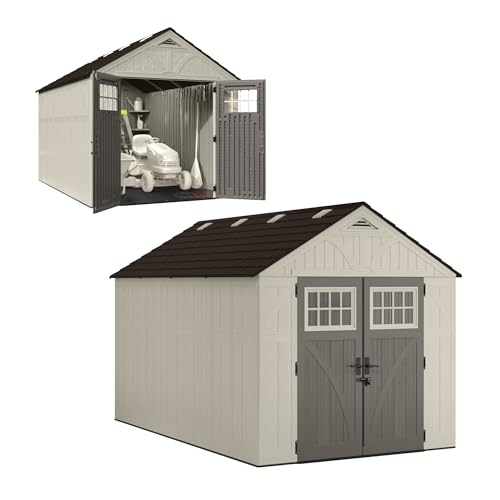
Steel remains the cheapest per square foot at this size, with Arrow's Elite line adding a high gable roofline for real headroom over its Classic line at a moderate premium. Resin sheds at 10x12 and up, like Lifetime's 8x10 and larger models, add steel-reinforced panels and skylights but cost noticeably more per square foot than steel. True wood-frame kits from Little Cottage Co. and Best Barns are the most expensive option here by a wide margin, priced for buyers who want the look and resale value of a real outbuilding rather than the lowest cost per square foot.
See the direct comparison in metal vs wood shed and 8x10 vs 10x12 shed.
How do the picks compare?
| Polar Aurora 10x12 Metal | Arrow Classic 12x12 Metal | Little Cottage Co. 10x12 Wood | |
|---|---|---|---|
| Price | $369.99 | $1,119.99 | $2,559 |
| Construction | Galvanized steel | Galvanized steel | Precut lumber frame |
| Approx. floor space | ~120 sq ft | ~144 sq ft | ~120 sq ft |
What does the foundation look like at this size?
A large shed needs a proportionally larger, more carefully leveled base than a small tool shed; a 10x12 shed calls for a 12x14 gravel pad, roughly 2.28 cubic yards of crushed stone, about 3.2 tons once you add the 10 percent extra for compaction. Size your exact pad with the gravel pad calculator and check the roof pitch requirement with the shed roof pitch calculator if the model uses asphalt shingles. If you would rather pour concrete than lay gravel at this size, budget on the order of 70 to 75 bags of 80 pound concrete mix for a 10x12 slab at 4 inches thick with the standard 10 percent waste margin, noticeably more than the roughly 49 bags an 8x10 slab needs.
- Anchor every corner minimum, plus one every 6 to 8 feet along the long walls, which matter more as wall height and surface area increase
- Check your local permit threshold before ordering; a 10x12 or larger shed can exceed a town's amended limit even where the IRC's 200 square foot exemption would otherwise apply
- Plan for a multi-person, multi-day build at this size, especially for a wood kit
How we chose these picks
Nothing on this list was assembled or tested in person. We filtered to products with a published footprint of 10x12 or larger, compared roofline design, included floor hardware and price per square foot across steel, resin and wood kits, and weighted recurring themes in verified owner reviews about wall rigidity and assembly time at this larger scale. We also deliberately spread the three tiers across steel and true wood construction rather than staying within one material, since buyers shopping this size range are often weighing that exact tradeoff between lowest cost and long-term resale appeal.
Buying tips before you order
Confirm delivery logistics before ordering; large shed panels are heavy and bulky, and some carriers require curbside delivery rather than placement in your yard. Measure your gate and any fence line the panels need to pass through, and plan for a multi-person crew rather than assuming a two-person weekend build like a small shed.
What should you actually do with 120 square feet or more?
The most common regret in owner reviews of large sheds is not sizing too big, it is not planning the layout before assembly. At 120 square feet and up, a shed can genuinely function as a zoned workshop: one wall for a workbench and power tools, one wall for stand-up shelving, and a clear center aisle for a mower or equipment to roll through without navigating around fixed furniture. Sketch that layout before ordering shelving or a workbench kit, since retrofitting a large shed after the fact wastes much of the space advantage over a smaller size.
Electrical work is also worth planning at this stage rather than after the shed is up. A workshop-scale shed benefits from at least basic lighting and an outlet circuit, and running that conduit is far easier before the floor and walls are finished than after. Remember that any electrical work always needs a permit, regardless of the shed's overall size.
The picks, side by side
Prices change often; the button shows today's price on Amazon.
More roundups
- Best lean-to sheds
- Best metal sheds
- Best resin sheds
- Best shed floor kits
- Best shed ramps
- Best small sheds
Get these picks and prices by email
One page with every item, quantity and current price, so you can cost the whole project before you buy any of it.
Used only to send the list. You can also just read it on this page.Frequently asked questions
What is considered a large storage shed?
On this site, large means 10x12 or bigger, roughly 120 square feet and up. Below that, sheds function more as tool and equipment storage; at 10x12 and above, they start working as a real workshop, small garage substitute or multi-purpose outbuilding.
Is steel or resin cheaper for a large shed?
Steel remains cheaper per square foot at this size, though premium steel lines like Arrow Elite run well above budget generic steel. Resin sheds at 10x12 and up add steel-reinforced panels and skylights but generally cost more per square foot than an equivalent steel structure.
Do large sheds need a bigger foundation?
Yes, proportionally. A 10x12 shed needs a 12x14 gravel pad, around 3.2 tons of crushed stone once you include the extra 10 percent for compaction, compared to about 2.3 tons for an 8x10 shed's smaller pad. Size it exactly with the gravel pad calculator rather than estimating.
Will a large shed need a permit?
Often, yes, more so than a small shed. The IRC exempts one-story detached storage sheds up to 200 square feet, but many towns amend that down to 120 or 100 square feet, which a 10x12 or larger shed can exceed. Check your local code before ordering, since this varies significantly by municipality.
Can a large shed hold both a mower and a workshop?
Yes, that is the main appeal of the 10x12 and larger category. A shed at this size comfortably fits a riding mower plus a workbench and full wall shelving, which is the combination that pushes most buyers up from an 8x10 into true large-shed territory.
This page is researched guidance, not professional engineering, legal or building-code advice. Sizes, loads and permit rules vary by product and by town: check your local code and the kit manufacturer's instructions before you build.