Comparison
Pavers vs gravel for a shed base
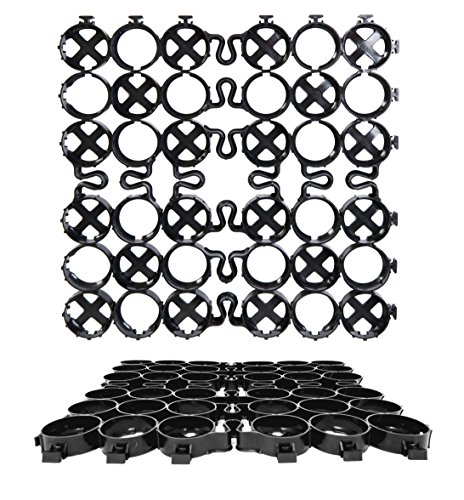
Rigid interlocking systems like the TRUEGRID PRO LITE Permeable Paver at $208 cost around $2.89 a square foot and carry a stated 120,000 lb load class. Flexible gravel grids like the Sumloty Gravel Grid at $31.99 cost closer to $0.24 a square foot but are rated in pounds per square foot, not a vehicle load class, and exist to keep loose stone from spreading rather than to bear repeated weight.
| Interlocking pavers | Flexible gravel grid | |
|---|---|---|
| Cost per sq ft (this catalog) | about $2.20 to $3.75 | about $0.24 to $0.31 |
| Rating type | Stated load class, e.g. 120,000 lb | Stated in lbs per square foot, e.g. 1,885 lb/sq ft |
| Rigidity | Rigid interlocking cells, holds its shape | Flexible mesh roll, conforms to the ground |
| Purpose | Bear repeated weight, vehicle-rated on some models | Keep loose stone from spreading or rutting |
| Install method | Snap-together units, more precise layout | Roll out and stake, faster on irregular areas |
| Best surface finish | Walkable, clean grid lines, holds gravel fill flush | Looser finish, stone can still shift at the surface |
| Typical use here | A shed base that also sees foot or occasional vehicle traffic | A shed base with light foot traffic only |
| Best for | Anyone who wants a more finished, load-rated base | The lowest-cost way to stabilize a basic gravel pad |
The options compared

Best mid-tier paver system Standartpark Vodaland Permeable HexPave System $143.10 Check price on Amazon

Best budget paver pick Briwooody 12 Pcs 16 x 16 Inch Permeable Pavers Gravel Grid $79.99 Check price on Amazon

Prices change often; the button shows today's price on Amazon.
What is actually different between these two products?
Both go under a shed's gravel fill, but they are built for different jobs. A rigid paver system like the TRUEGRID PRO LITE at $208 is made of interlocking cells that snap together into a fixed grid, rated with a stated load class, in this case 120,000 lb. That is a vehicle-grade rating, well beyond what a shed foundation needs on its own, but it tells you the material is built to hold its shape under repeated heavy weight without shifting.
A flexible gravel grid like the Sumloty Gravel Grid at $31.99 is a roll-out mesh, rated in pounds per square foot rather than a load class, meant to keep loose crushed stone from migrating sideways or rutting under foot traffic. It is not trying to be a rigid paved surface; it is trying to make a gravel pad behave better over time for a fraction of the cost.
How much does the cost gap actually matter?
At the sizes in this catalog, it is a real gap. The TRUEGRID pack covers 72 square feet for $208, about $2.89 a square foot. The Vodaland HexPave system at $143.10 covers 65 square feet for a similar per-square-foot cost, around $2.20. Compare that to the Sumloty Gravel Grid at $31.99, which covers 132 square feet for well under $1 a square foot.
For an 8x10 shed with a 10x12 pad, that difference works out to real dollars: roughly $350 in rigid pavers against roughly $32 in flexible mesh for the same footprint. If your shed sees light foot traffic and the pad is not doubling as a walkway or parking spot, the flexible grid does the job for a fraction of the cost.
When is the rigid paver system worth the extra cost?
When the pad has to do more than sit under a shed. If the same gravel area also serves as a walkway to a gate, a spot where you occasionally park a mower or a small trailer, or an area that gets wet and soft in your climate, the rigid interlocking cells hold their shape and keep the surface from rutting in ways a flexible mesh under loose stone eventually will. A budget paver option like the Briwooody 16x16 permeable pavers at $79.99 splits the difference: still rigid and interlocking, priced a bit higher than the flexible mesh but well under the heavier-duty TRUEGRID system.
Do either of these replace the gravel itself?
No, both go under or within a gravel fill, not instead of it. You still need crushed stone at the depth called for by your shed's size, typically 4 inches deep, or 6 inches on soft or wet soil, sized to the shed's footprint plus a foot on every side. Run your shed's numbers on the gravel pad calculator to get the stone quantity right before you decide which stabilizing product to add underneath or within it.
How we chose these picks
Nothing here was built or tested by hand. These picks and the cost-per-square-foot figures come from published manufacturer specifications and coverage areas stated directly in each listing, computed the same way across every product rather than estimated.
Buying tips before you decide
- Match the product to the traffic the pad will actually see; do not pay for a vehicle-rated paver system under a shed that only gets foot traffic a few times a week.
- Order both stone and a stabilizing product for the same footprint measurement; use the gravel pad calculator to size the stone.
- Check your local code before you build; a shed foundation project does not usually need a separate permit, but always check setbacks and confirm with your local office.
- Call 811 before digging out for any base, paver or gravel.
Frequently asked questions
Do I need pavers under every shed, or is plain gravel enough?
Plain gravel with a flexible stabilizing grid is enough for most kit sheds that only see light foot traffic. Rigid interlocking pavers earn their higher cost when the same pad also serves as a walkway, a spot to park equipment, or sits in a climate where the ground gets soft and rutted easily.
Are permeable pavers actually permeable, or do they trap water?
The permeable systems in this comparison are designed with open cells that let water drain straight through to the gravel and soil below, rather than sealing the surface the way solid concrete pavers would. That is part of why they are marketed for shed bases and driveways specifically, since standing water under a shed floor causes more problems than almost anything else.
Can I mix a gravel grid and pavers on the same project?
Not typically as layered products on the exact same spot, since they serve overlapping purposes, but you can use a flexible grid under a shed's footprint and a rigid paver system for an adjoining walkway or parking area if your project has both kinds of traffic.
How thick does the gravel fill need to be over either product?
Follow your shed's own foundation math rather than the paver or grid manufacturer's minimum, since shed stability depends on total pad depth. This site's standard is 4 inches deep, or 6 inches on soft or wet soil, sized to the shed's footprint plus a foot of clearance on every side.
Will a flexible gravel grid last as long as a rigid paver system?
For its intended job, keeping loose stone in place under light foot traffic, yes, a flexible grid should last for many years without needing replacement. It is not built to resist the same repeated heavy loading a rigid, vehicle-rated paver system is designed for, so match the product to how the pad will actually be used.
This page is researched guidance, not professional engineering, legal or building-code advice. Sizes, loads and permit rules vary by product and by town: check your local code and the kit manufacturer's instructions before you build.