
Guide
Shed ventilation guide
Most sheds need at least two vent points working as a pair, low (soffit or foundation vents) and high (gable or ridge vents), so air actually exchanges instead of sitting still. A single vent on one wall barely helps; opposing high and low vents create real airflow.
Why a shed needs ventilation at all
A closed, unvented shed traps humidity generated by ground moisture, stored fuel and equipment, and simple daily temperature swings between a hot afternoon and a cool night. That trapped air condenses on cool surfaces overnight, tool blades, metal shelving, the underside of a metal roof, and drives rust and mildew even without a single leak anywhere in the structure. Ventilation gives that air somewhere to go instead of sitting and condensing.
Gable vs soffit vs ridge vents
| Vent type | Location | Best for |
|---|---|---|
| Gable vent | High on a wall or under the peak | Most kit sheds; easiest retrofit |
| Soffit vent | Low, under the roof overhang | Pairing with a gable vent for real air exchange |
| Ridge vent | Along the roof peak | Larger sheds and workshops with continuous ridge access |
| Static roof vent | Roof surface, mid-slope | Sheds without an accessible ridge or gable wall |
Why high-and-low placement matters more than vent count
A single gable vent on one wall lets a small amount of air exchange through simple diffusion, but it does not create real airflow. Pairing a low vent (soffit or foundation-level) with a high vent (gable or ridge) sets up a natural stack effect: warm, humid air rises and exits high, pulling cooler air in low to replace it. This pairing does more for moisture control than doubling the number of high vents alone.
How many vents does a shed need?
- Small sheds (up to about 6x8): one gable vent on each gable end, or one gable vent paired with a soffit vent, is typically enough.
- Mid-size sheds (8x10 to 10x12): vents on both gable ends plus soffit or foundation vents along at least one long wall.
- Larger sheds or workshops: a ridge vent running the length of the roof, paired with continuous soffit venting, moves the most air with the least visible hardware.
Sheds storing gas-powered equipment (mowers, snow blowers) benefit from more ventilation than the minimum, since fuel vapor adds to the humidity and odor load inside a sealed structure.
Retrofitting vents into an existing shed
Most gable vent kits are designed to be cut into an existing wall panel with a jigsaw or oscillating tool, following a paper template, then screwed in place with a built-in screen to keep out insects and small animals. This is a reasonable weekend project on most resin and metal sheds. Soffit vents are a similarly simple retrofit where an overhang exists to cut into.
Vents alone will not solve every moisture problem
Ventilation addresses trapped humid air, but it will not fix a floor sitting in standing water or an actual roof leak. If a shed stays damp after adding proper high-low ventilation, check the foundation and roof seams next using the keeping a shed dry guide before adding more vents than the size chart above suggests.
Vents and moisture control for a shed


Prices change often; the button shows today's price on Amazon.
Moisture absorbers as a supplement, not a replacement
Hanging moisture absorbers are useful inside enclosed cabinets or a shed that only gets opened occasionally, where even good ventilation does not fully clear residual humidity. They are not a substitute for vents in a shed used regularly, since they saturate and need replacing on a schedule rather than continuously exchanging air the way a vent does.
How we approached this guide
These vent placement and sizing recommendations are based on published manufacturer vent kit instructions and recurring patterns in verified owner reviews describing what reduced condensation and rust, not hands-on testing. Local humidity and climate vary widely, so treat the sizing suggestions above as a starting point and add ventilation where a shed runs unusually humid for its region.
Matching vent size to shed size
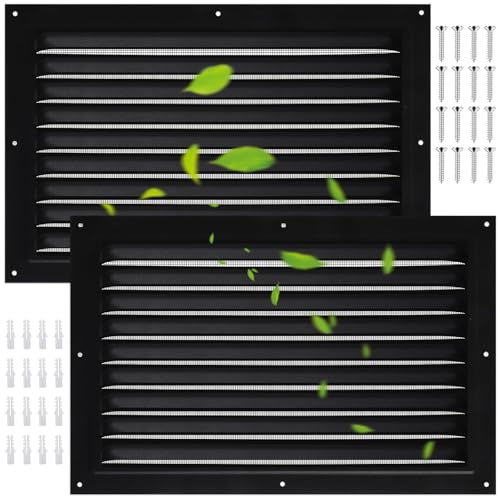
A compact gable vent, such as Durnovty's 6x6 in metal gable vent (around $11.99), suits a small shed in the 4x6 to 6x8 range where one vent per gable end is enough. On mid-size and larger sheds, stepping up to a larger vent like Sel Natural's 8x12 in shed vent (around $24.99) moves more air per opening without needing to cut additional holes into the wall panels. Pairing either size with a low soffit vent, such as smrtcol's 4 in round soffit vent (around $19.99), completes the high-low pairing that actually drives airflow rather than just diffusion.
A note on insects and small animals
Every vent that opens to the outside is also a potential entry point for insects and small animals if it lacks a proper screen. Quality vent kits include a built-in mesh or louvered screen behind the opening for exactly this reason. Check that any vent you add, factory-installed or retrofitted, has this screen intact, and inspect it occasionally for damage, since a torn screen defeats the purpose of the vent as a controlled opening rather than an open gap in the wall.
Ventilation and stored fuel or chemicals
A shed used to store gasoline for a mower or snow blower, paint, or other chemicals benefits from ventilation beyond the minimum needed for humidity control alone, since these materials off-gas vapor that should not be left to accumulate in a sealed space. This is general guidance rather than a substitute for the specific storage instructions printed on any fuel or chemical container, which should always take priority.
Frequently asked questions
Do I need both a gable vent and a soffit vent?
Pairing a low vent (soffit or foundation level) with a high vent (gable or ridge) creates real airflow through the stack effect: warm humid air rises and exits high while it pulls in cooler air low. A single gable vent alone only allows limited diffusion, so the pair does far more for moisture control than one vent type alone.
How many vents does an 8x10 shed need?
A typical 8x10 does well with a gable vent on each gable end, or one gable vent paired with soffit or foundation-level vents along at least one long wall. Sheds storing gas-powered equipment benefit from slightly more ventilation than this minimum because of added fuel vapor and humidity load.
Can I cut a vent into a shed I already own?
Yes, most gable vent kits are designed for exactly this: a paper template, a jigsaw or oscillating tool to cut the wall panel, then the vent screws in with a built-in insect screen. It is a reasonable weekend project on most resin and metal sheds with an accessible gable wall or soffit overhang.
Will ventilation fix a musty smell in my shed?
Often, yes, if the musty smell is from trapped humid air rather than a standing-water floor or active leak. Add proper high-low vent pairing first, and if the smell persists after a few weeks, check the foundation and roof seams next since ventilation cannot fix a moisture source, only exchange the air around it.
Are moisture absorbers a substitute for shed vents?
No. Moisture absorbers handle residual humidity well in enclosed spaces like cabinets or an infrequently opened shed, but they saturate and need replacing on a schedule, unlike a vent which continuously exchanges air. Use them as a supplement to proper ventilation, not instead of it.
This page is researched guidance, not professional engineering, legal or building-code advice. Sizes, loads and permit rules vary by product and by town: check your local code and the kit manufacturer's instructions before you build.